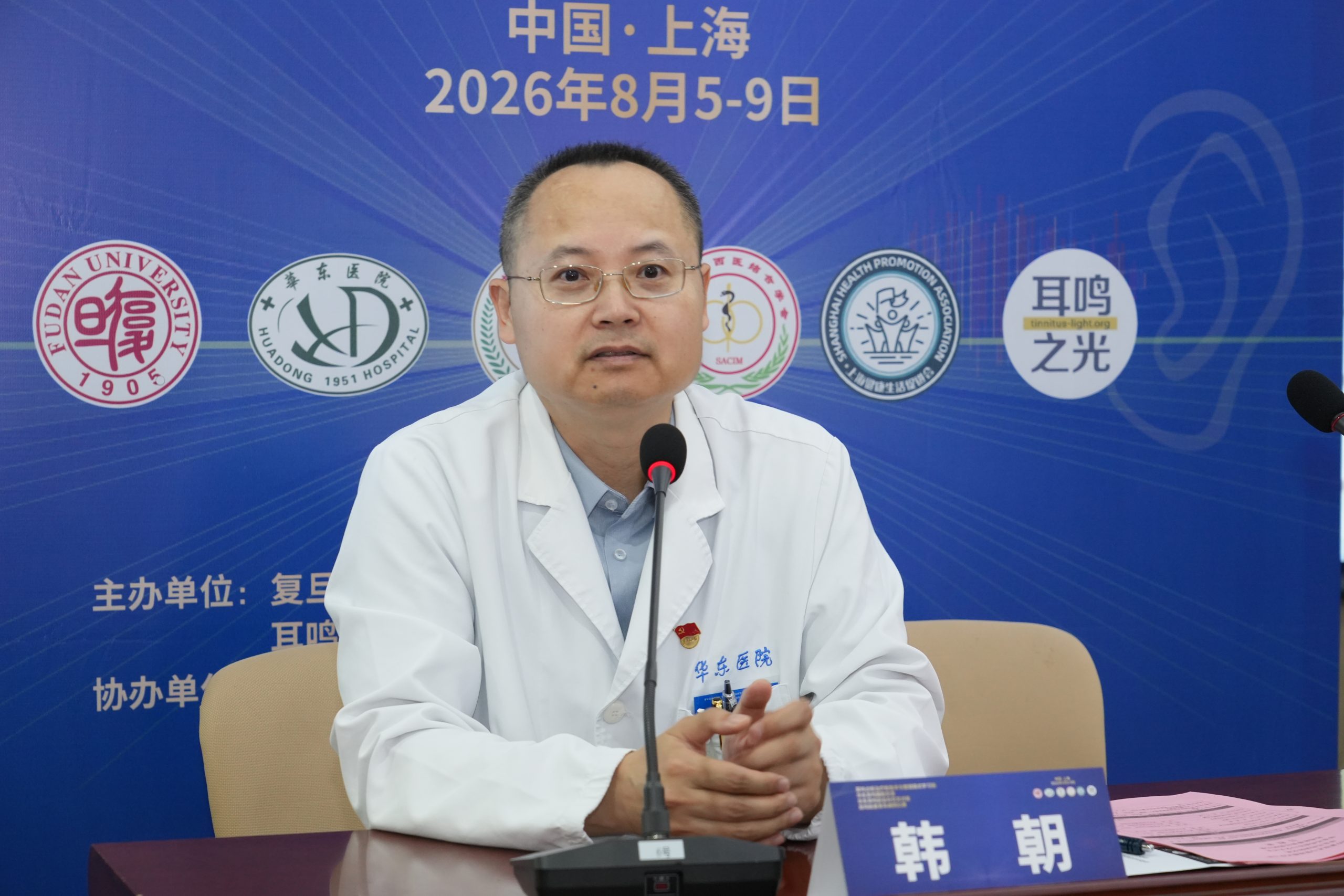
 The 2026 Training Course on New Technologies and Management Models in Tinnitus Diagnosis and Treatment, held from 5–9 August at Huadong Hospital Affiliated to Fudan University in Shanghai, provides an important insight into the continuing development of tinnitus care in China.
Now in its fifth year, the programme brought together more than 100 ENT specialists, otologists, audiologists and hearing rehabilitation professionals from across China. Its scientific programme reflected the increasingly multidisciplinary nature of tinnitus care, spanning clinical diagnosis and management, sound therapy, hearing rehabilitation, cognitive behavioural approaches, hyperacusis and misophonia, cochlear implantation, auditory neuroscience and emerging gene therapies.
Perhaps the most significant development is the scale of the clinical infrastructure now emerging. More than 200 tinnitus clinical centres have been established across China, predominantly within tertiary hospitals. This creates considerable potential not only for improving access to specialist tinnitus care, but also for professional education, development of clinical standards and large-scale multicentre research.
The combination of a substantial patient population, an expanding network of specialist centres, strong academic institutions and growing engagement with international colleagues places China in an increasingly important position within the global tinnitus community.
The next step should be to strengthen connections between these clinical networks and the wider international tinnitus community. Shared education, collaborative research, exchange of clinical experience and development of evidence-based multidisciplinary practice can help ensure that advances in tinnitus science translate into meaningful improvements in patient care.
Hashir International Institute welcomes the continued development of these collaborations and looks forward to working with colleagues in China and internationally to advance education, research and clinical care in tinnitus, hyperacusis and misophonia.
To read the full report click here.