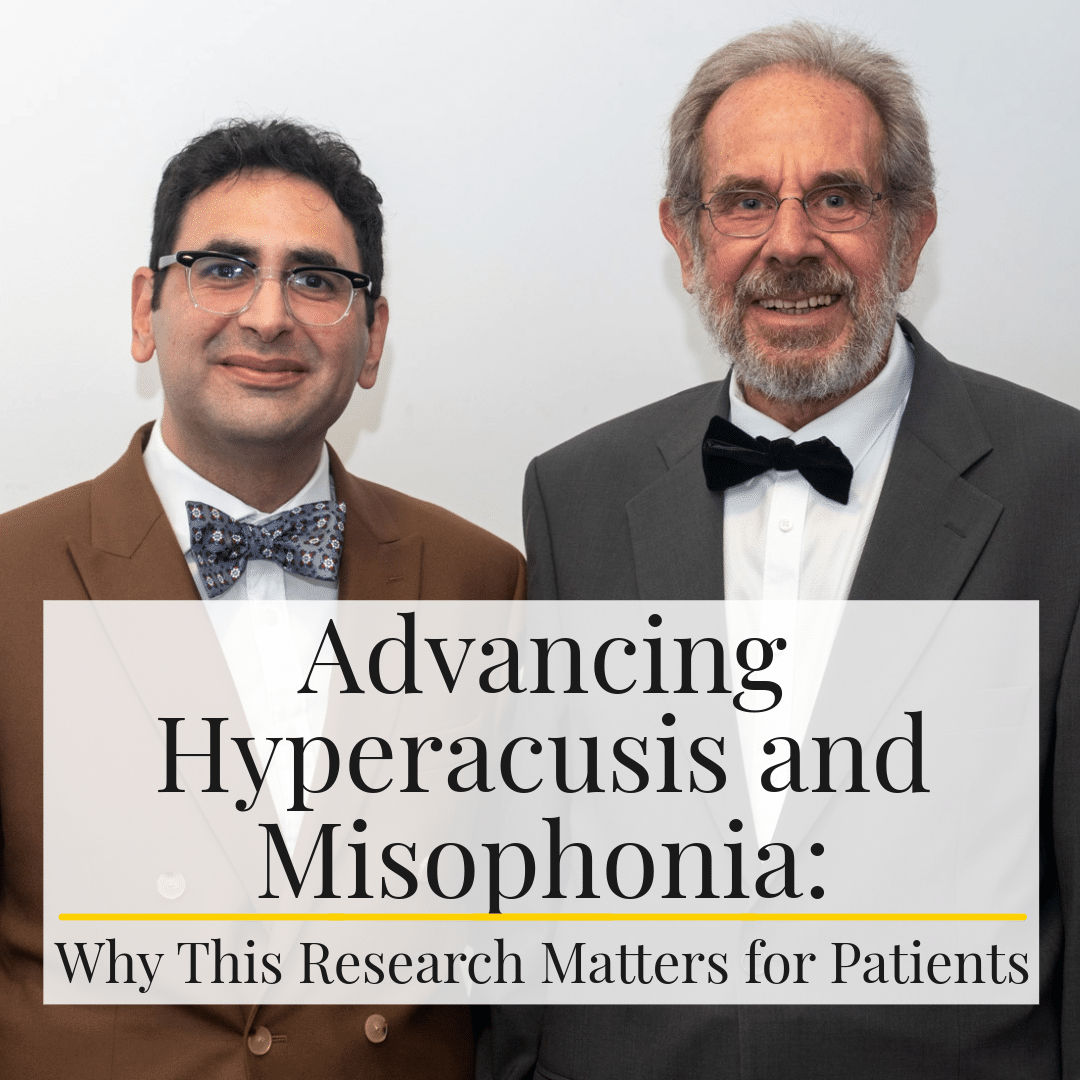
 Hyperacusis and misophonia have long been misunderstood, under-recognised, and difficult to treat. Many people living with these conditions describe years of uncertainty, limited access to specialist care, and a lack of clear explanations. A recent international collaboration marks an important step forward.
Following the successful 7th International Conference on Hyperacusis and Misophonia, held in Warsaw in 2024, a special issue of the Journal of Hearing Science was published, bringing together the latest research dedicated entirely to these conditions. The conference and the special issue were organised through collaboration between the Institute of Physiology and Pathology of Hearing, the Institute of Sensory Organs, and the Hashir International Institute.
Why this special issue is important
The aim of this special issue was threefold:
For patients, this represents a shift away from fragmented understanding toward more coordinated, evidence-informed approaches.
Bringing together different perspectives
The articles in this issue reflect contributions from medical, audiological, psychological, and neuroscientific experts, alongside insights informed by lived experience. Together, they show that research into sound intolerance is becoming more mature, nuanced, and clinically relevant.
Rather than treating hyperacusis and misophonia as rare or purely behavioural problems, the research highlights their biological, neurological, emotional, and social dimensions.
Understanding hyperacusis across the lifespan
Several studies focus on hyperacusis and sound sensitivity from different angles. Research explores how loudness perception can become altered even when hearing tests appear normal, helping explain why everyday sounds may feel overwhelming or painful.
Other studies examine hyperacusis in adults and children, showing links with anxiety, sensory sensitivities, and emotional wellbeing. Importantly, this work confirms that hyperacusis can affect people at any age and may look different depending on individual sensory and psychological factors.
Clarifying misophonia and its impact
Misophonia is explored not only as a sound sensitivity, but as a condition with strong emotional, developmental, and relational effects. Research in this issue examines possible contributing factors such as learning, family patterns, stress, and brain development.
One study highlights how misophonia can significantly affect close relationships and intimacy, reinforcing that the impact of misophonia often extends beyond the individual to partners and families.
Why distinguishing conditions matters
A key theme throughout the issue is that hyperacusis and misophonia may look similar on the surface, but they are not the same condition. Different mechanisms are thought to be involved, which means that assessment and treatment need to be carefully tailored.
This helps explain why some people benefit from certain approaches while others do not, and why one-size-fits-all treatment can be frustrating and ineffective.
The role of international collaboration
The International Conference on Hyperacusis and Misophonia, which began in London in 2013, was created to accelerate progress by bringing together specialists from audiology, ENT, mental health, neuroscience, psychology, and related fields.
Insights from previous conferences have already helped shape international research and clinical practice. This special issue reflects that growing momentum and shared commitment to improving care.
Looking ahead to the next conference
Building on this progress, the 8th International Conference on Hyperacusis and Misophonia will take place in Hanover, Germany, from 14 to 16 October 2026. The conference will continue to focus on improving understanding, diagnosis, and treatment, always with the lived experience of patients at the centre.
Learn more
If you would like to explore the research discussed above, you can access the full Special Issue on Hyperacusis and Misophonia in the Journal of Hearing Science here:
https://www.journalofhearingscience.com/Issue-1-2025,15682
What this means for patients
For people living with hyperacusis or misophonia, this work sends a clear message:
At Hashir Tinnitus Clinic, we use this growing international evidence base to guide compassionate, individualised care, always recognising the complexity of sound intolerance and its impact on daily life.
If you would like to discuss how this evolving research applies to your own experience of hyperacusis or misophonia, we are always happy to explore this with you during an appointment.