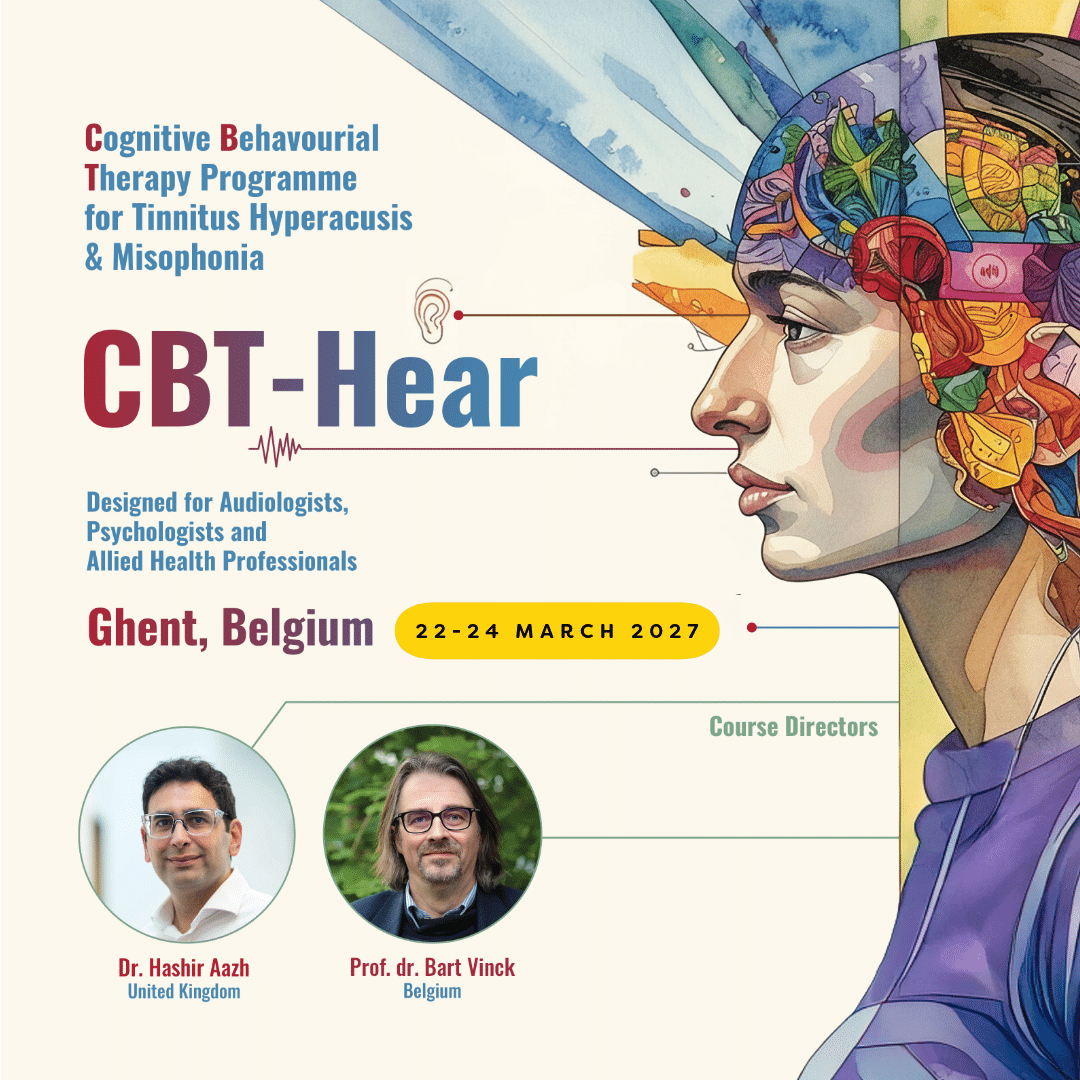
 As more people seek help for tinnitus, one of the biggest challenges is access to clinicians with the right skills and experience. Many patients encounter well-meaning professionals who lack specific training in tinnitus-focused psychological care, leading to inconsistent advice and uneven support. A new initiative called CBT-Hear was developed to address this gap.
CBT-Hear is a structured training and certification pathway designed to improve the quality, consistency, and availability of tinnitus care, particularly within audiology-led services.
Why specialised training matters
Cognitive behavioural therapy (CBT) is one of the most effective approaches for reducing tinnitus-related distress. However, not all clinicians offering tinnitus support have received formal CBT-informed training tailored to tinnitus and sound sensitivity.
Without clear training pathways, clinicians may feel uncertain about:
CBT-Hear was created to provide clarity, structure, and confidence for clinicians, which directly benefits patients.
A step-by-step approach to safe care
The CBT-Hear programme is built around progressive stages of competency. Early stages focus on core skills such as assessment, understanding tinnitus mechanisms, formulation, and guided intervention for people without complex psychological difficulties.
Later stages support more advanced work, including:
This staged approach helps ensure that patients receive care that is appropriate, safe, and matched to clinician expertise.
Working alongside mental health professionals
A key principle of CBT-Hear is collaboration rather than replacement. The programme does not turn audiologists into psychologists, nor does it reduce the role of mental health specialists.
Instead, clinicians are trained to:
For patients, this means fewer mixed messages and more coordinated care.
Supervision as a cornerstone of quality
One of the most important features of CBT-Hear is its strong emphasis on clinical supervision. Regular supervision and case discussion are built into certification requirements.
This matters because supervision:
For patients, supervision translates into more thoughtful, consistent, and accountable care.
Consistency without rigidity
CBT-Hear promotes the use of structured assessment tools, formulation frameworks, and outcome measures. This helps ensure that care is evidence-based and comparable across services.
At the same time, clinicians are encouraged to adapt support to each individual’s experience. The aim is consistent quality, not a one-size-fits-all approach.
Expanding access to care
The programme combines online learning with supervised clinical practice, making it accessible to clinicians across different regions and healthcare settings. This is especially important for patients who live outside major centres or struggle to access specialist services.
By improving workforce capacity, CBT-Hear aims to reduce waiting times and increase access to skilled tinnitus care.
What this means for patients
For people living with tinnitus, CBT-Hear represents a commitment to improving care at a system level. It means:
At Hashir Tinnitus Clinic, we believe that high-quality tinnitus care depends on both evidence and training. Programmes like CBT-Hear help ensure that patients receive informed, confident, and compassionate support.
If you would like to explore this topic further, you can read the Annual Tinnitus Report 2026, which includes a detailed discussion of CBT-Hear and workforce development in tinnitus care.
Read the full Annual Tinnitus Report 2026 here:
https://hashirtinnitusclinic.com/news/annual-tinnitus-report/
If you would like to discuss treatment options for tinnitus or understand how CBT-informed care may help you, we are always happy to explore this with you during an appointment.