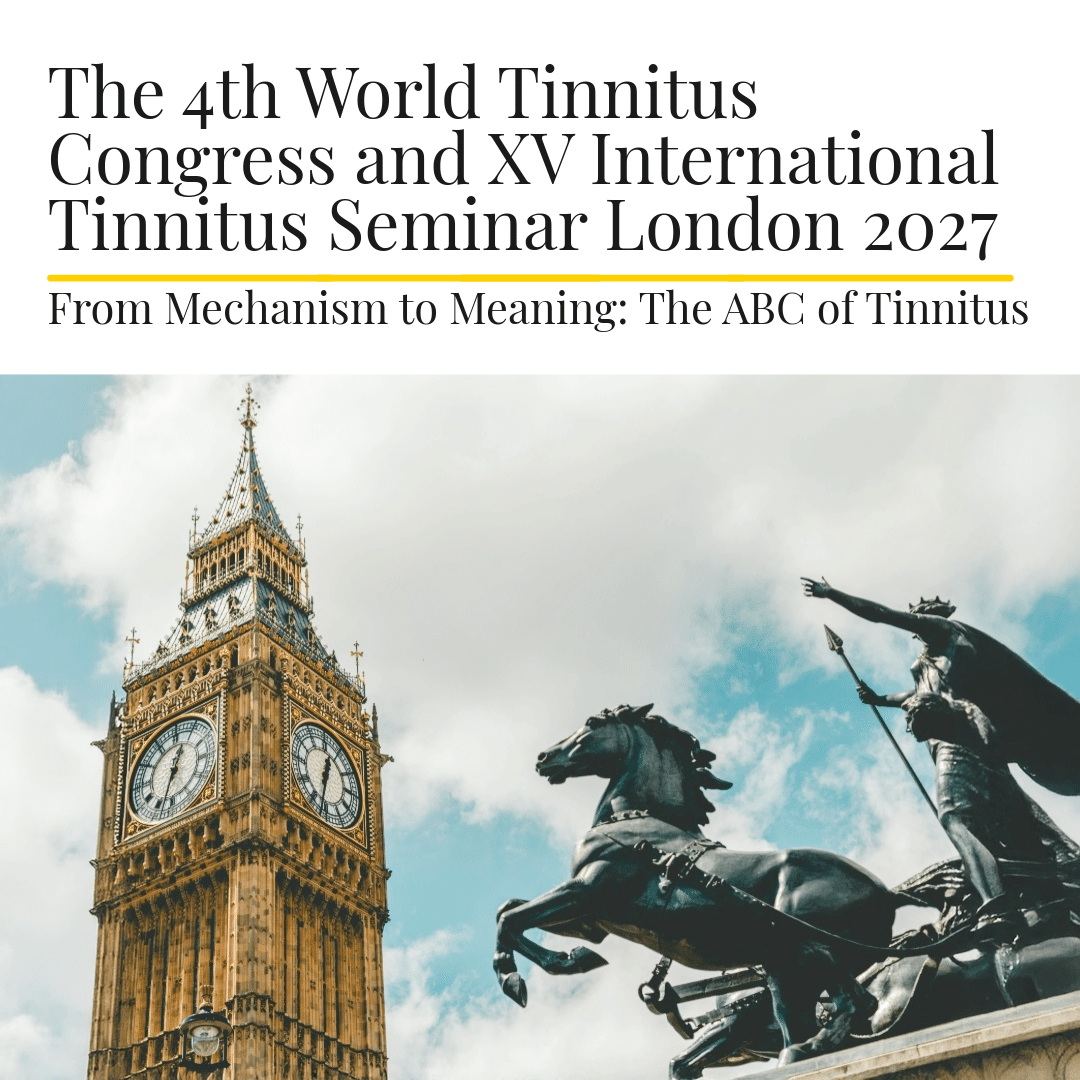
 In 2027, the global tinnitus community will come together in London for an important event: the World Tinnitus Congress and the XV International Tinnitus Seminar. This meeting represents a major step forward in how tinnitus is understood and addressed, with a clear guiding idea: From Mechanism to Meaning.
This theme reflects a growing recognition that understanding tinnitus is not only about what happens in the ear or the brain, but also about how tinnitus is experienced, interpreted, and lived with.
Why this congress matters
Over recent decades, research has greatly improved understanding of the biological and neurological mechanisms behind tinnitus. At the same time, many people with tinnitus still experience fragmented care, conflicting advice, or a lack of joined-up support.
The aim of the 4th World Tinnitus Congress is to bring these strands together by connecting scientific discovery with clinical practice and lived experience.
A broad and integrated programme
The congress programme is structured around eleven core areas, covering the full range of tinnitus research and care. These include how tinnitus arises in the brain, how emotions and attention influence distress, the role of cognitive behavioural therapy, advances in hearing and sound-based treatments, medical and vascular causes, and emerging approaches such as neuromodulation and biomarkers.
By bringing these perspectives together, the congress reflects the reality that tinnitus is not a single condition, but a group of experiences with different causes and different support needs.
Moving away from one-size-fits-all care
A key focus of the congress is precision and differentiation. Rather than treating all tinnitus in the same way, sessions will explore how different subtypes respond to different approaches.
This includes attention to:
This approach supports more realistic expectations and more targeted care.
Recognising the role of the mind and meaning
The congress places strong emphasis on psychological and behavioural science, not as an add-on, but as a core part of tinnitus care. Research increasingly shows that distress is shaped by how tinnitus is interpreted, attended to, and emotionally processed.
Sessions on coping, emotional regulation, attention, and meaning reflect this understanding and align with stepped-care and integrated service models used in modern tinnitus clinics.
Training the next generation
Another important aim of the congress is education. Improving tinnitus care depends not only on research, but on how knowledge is shared and applied.
The programme includes sessions focused on training, early-career development, mentorship, and shared standards across professions. This helps ensure that future patients benefit from better-prepared clinicians and more consistent care.
Keeping lived experience at the centre
Importantly, the congress explicitly includes patient perspectives. Lived experience is woven into discussions of research priorities, treatment outcomes, and quality of life.
This ensures that scientific progress remains grounded in what actually matters to people living with tinnitus: functioning, wellbeing, identity, and meaning.
A global meeting with a shared purpose
Held in London, the congress will bring together clinicians, researchers, and stakeholders from around the world. It provides a platform for collaboration, shared learning, and discussion about the future direction of tinnitus research, funding, and care.
What this means for patients
For people living with tinnitus, the 4th World Tinnitus Congress represents a positive shift. It signals a move away from fragmented explanations toward integrated, human-centred care that takes both science and lived experience seriously.
At Hashir Tinnitus Clinic, this approach reflects how we think about tinnitus every day: understanding the mechanisms, acknowledging the personal impact, and supporting people to live meaningful lives alongside sound.
If you would like to explore this topic further, you can read more in the Annual Tinnitus Report 2026, which discusses the congress and its aims in detail.
Read the full Annual Tinnitus Report 2026 here:
https://hashirtinnitusclinic.com/news/annual-tinnitus-report/
If you would like to discuss how current thinking in tinnitus research and care relates to your own experience, we are always happy to explore this with you during an appointment.