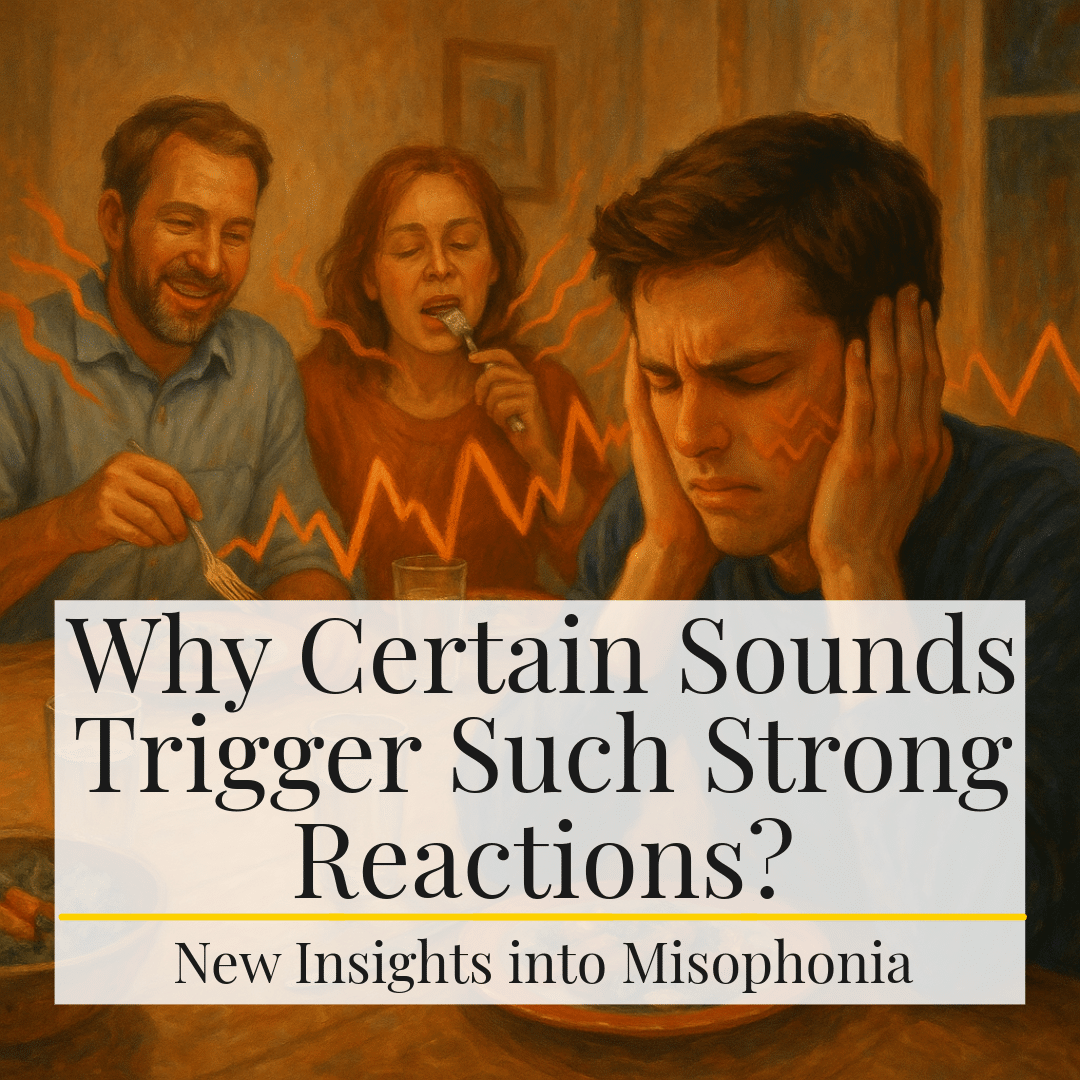
People with misophonia often describe intense emotional and physical reactions to specific sounds such as chewing, breathing, tapping, or repetitive noises. These reactions can feel confusing, overwhelming, and difficult to explain to others. A recent paper offers a thoughtful framework for understanding why misophonia may develop, and why it can feel so deeply personal.
In 2025, psychotherapist Jaelline Jaffe published an article exploring possible root causes of misophonia, based on clinical observations and informal surveys from psychotherapy practice. Rather than presenting firm conclusions, the paper proposes ten important areas that deserve formal scientific study.
Misophonia is more than a sound sensitivity
One key message from this work is that misophonia may not be caused by sound alone. Instead, it may arise from a complex interaction between:
This aligns with what many people with misophonia report: the reaction feels automatic, intense, and emotionally loaded, rather than simply uncomfortable or loud.
Ten possible contributors to misophonia
The article outlines ten areas that may help explain why misophonia develops in some people but not others. These include:
Importantly, these are not presented as causes in isolation, but as interacting factors that may increase vulnerability.
Why this matters for people with misophonia
Understanding misophonia in this broader way helps explain several common experiences:
This perspective also helps reduce self-blame. Misophonia reactions are not a choice, a personality flaw, or a failure of coping. They reflect how the brain has learned to respond to certain triggers.
What this means for treatment
Although this paper focuses on understanding causes rather than treatments, it supports modern clinical approaches that:
Effective care usually involves more than sound management alone. It requires working with the brain’s emotional systems in a structured, compassionate way.
A growing field, with more answers to come
Misophonia has only been formally recognised for a relatively short time. This paper reflects a field that is actively developing, asking better questions, and moving toward clearer explanations.
By identifying promising directions for research, it helps lay the groundwork for more effective and targeted treatments in the future.
Learn more
If you would like to read the original paper, it is available here:
Jaffe, J. (2025). The root causes of misophonia: Ten topics for formal study. Journal of Hearing Science.
https://doi.org/10.17430/jhs/214370
At Hashir Tinnitus Clinic, we work with people experiencing misophonia using evidence-based, psychologically informed approaches that respect both the science and the lived experience of sound sensitivity.
If you would like to discuss your symptoms or explore whether treatment may help, we are happy to talk this through during an appointment.