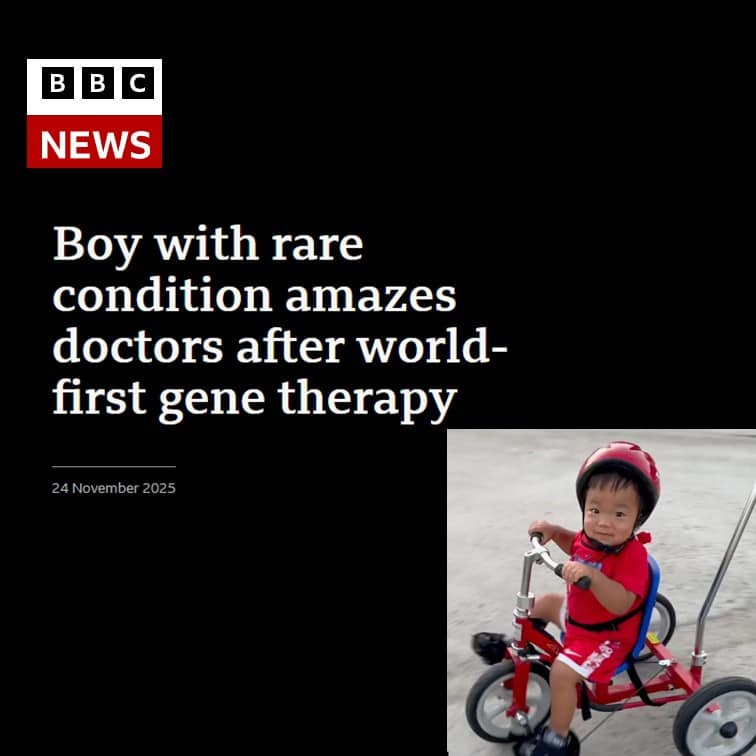
Ground-breaking one-off gene therapy offers new hope for children with Hunter syndrome, and raises wider questions about future gene-based treatments for hearing disorders including tinnitus
Researchers in the United Kingdom have reported a major advance in the treatment of Hunter syndrome (MPS II). For the first time, a child has received an experimental one-off stem-cell gene therapy that enables the body to produce the enzyme missing in this life-limiting genetic disorder. Early results suggest that the treatment may halt disease progression and eliminate the need for lifelong weekly infusion therapy.
A new direction for Hunter syndrome
Hunter syndrome, also known as mucopolysaccharidosis type II (MPS II), is caused by a mutation in the gene responsible for producing the enzyme iduronate-2-sulfatase. Without this enzyme, complex sugars accumulate in cells throughout the body, leading to progressive damage to organs and tissues. In its severe form, the condition limits life expectancy to adolescence or early adulthood.
Until now, the only approved treatment has been weekly enzyme replacement infusions. These can improve physical symptoms but they do not cross the blood–brain barrier and therefore do not prevent cognitive decline.
The new treatment is an autologous stem-cell gene therapy developed by researchers at the University of Manchester in collaboration with Great Ormond Street Hospital. It involves modifying a patient’s own stem cells in the laboratory before reinfusion. The corrected cells have begun producing the missing enzyme at sustained levels and appear able to reach the brain.
Early outcomes
Three-year-old Oliver Chu, the first patient to receive the therapy, no longer requires weekly infusions. Clinicians and his family report significant improvements in both physical and cognitive development. Oliver is one of five children currently enrolled in the trial.
Why this breakthrough matters for hearing and communication
Although Hunter syndrome is widely recognised for its effects on skeletal, cardiac and neurological function, the consequences for hearing are substantial and often overlooked.
Dr Hashir Aazh, Director of Hashir International Institute, commented: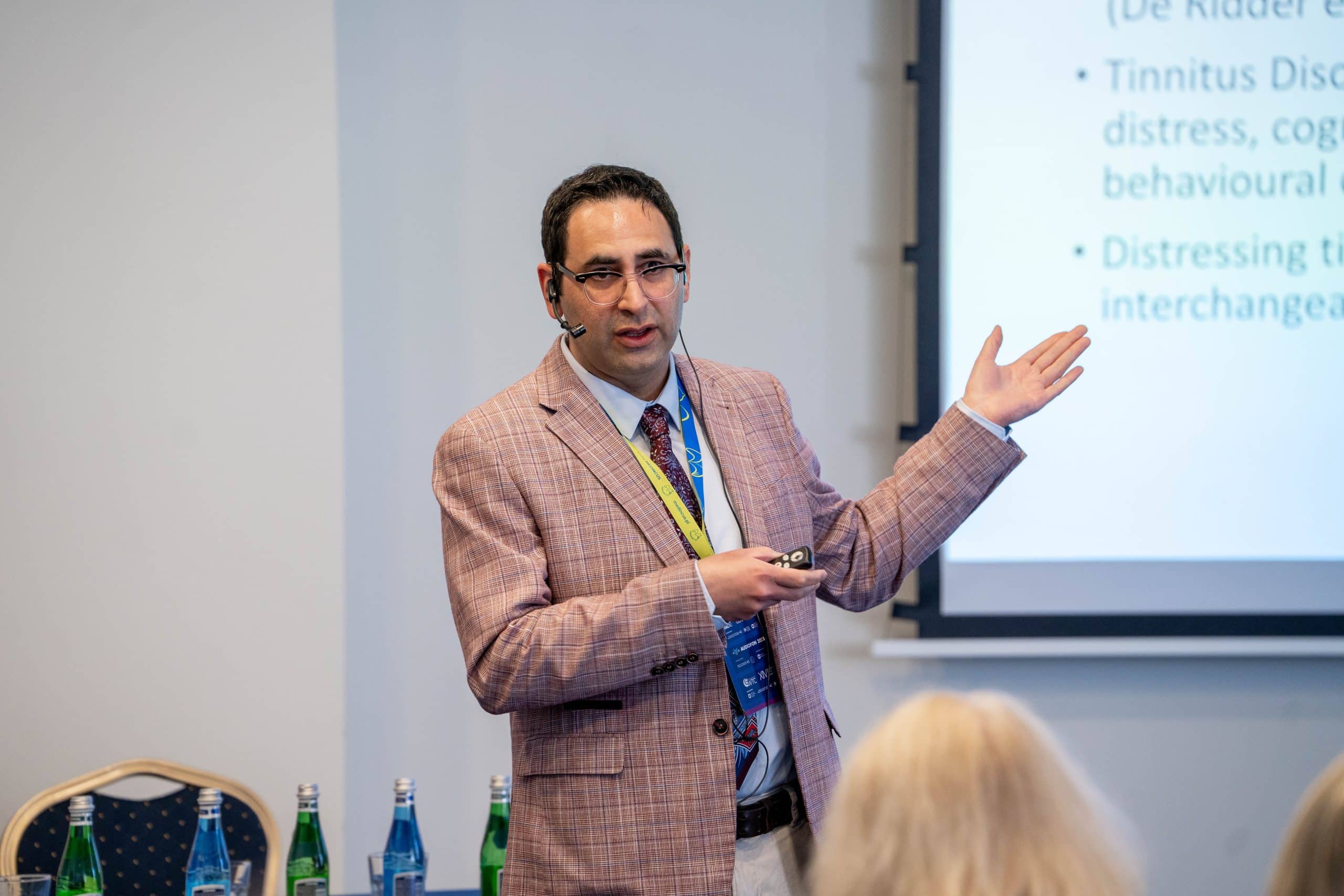
“Hearing impairment is not a minor feature of Hunter syndrome. It is one of its most pervasive clinical consequences. Based on research conducted by the Department of Otorhinolaryngology in Mainz, Germany using data from the international Hunter Outcome Survey, 67% of individuals with Hunter syndrome experience hearing loss and otitis media occurs in 72% of cases. Hearing was classified as mild in 24% of patients, moderate in 31%, severe in 22% and profound in 7%. Only one patient in the dataset had normal hearing in both ears at all time points, and hearing thresholds deteriorate by approximately 1 dB per year.
For these children and their families, hearing loss affects communication, emotional wellbeing and educational access. Early otolaryngological evaluation and intervention are essential. A treatment that slows disease progression could have far-reaching benefits beyond survival, including lifelong opportunities for communication, learning and social development.”
Implications for tinnitus and why the global hearing-science community is watching closely
Dr Aazh highlighted that the significance of this breakthrough extends beyond Hunter syndrome.
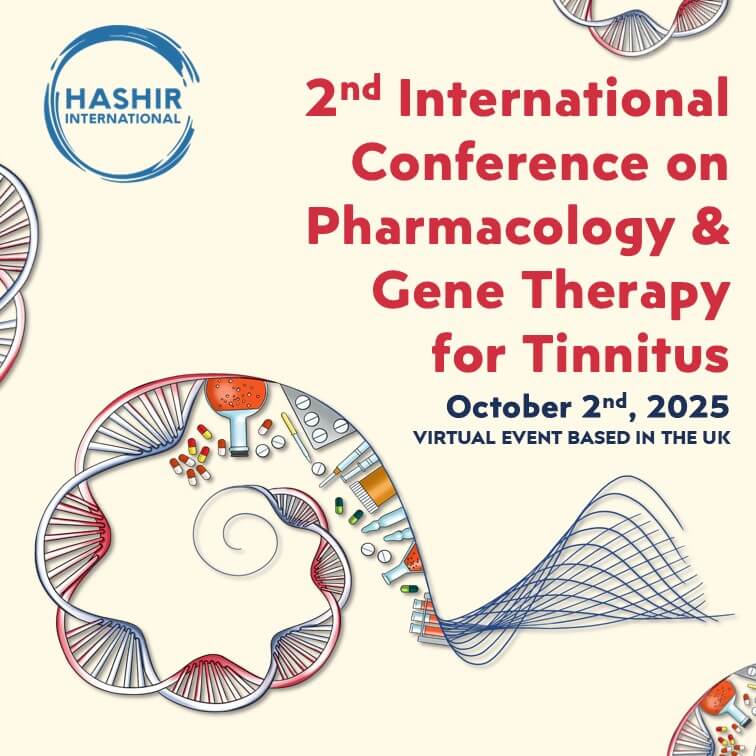 “The key question for the future is whether biological and gene-based therapies can be applied to tinnitus. Although tinnitus is not a single-gene disorder, growing evidence suggests that specific molecular and neurobiological mechanisms drive tinnitus in identifiable subgroups. If we can map those mechanisms and match them to targeted biological interventions, the field could shift from symptom management to disease modification.
This vision is the motivation behind the International Conference on Pharmacology and Gene Therapy for Tinnitus hosted by Hashir International Institute. The aim is to accelerate the discovery of tinnitus phenotypes that respond to pharmacological and gene-based therapies and to bring molecular medicine into the mainstream of tinnitus research and care. Full information about the conference is available at: https://hashirtinnitusclinic.com/event/2nd-international-conference-on-pharmacology-gene-therapy-for-tinnitus/ ”
A turning point for hearing science
The success of this first gene-therapy case marks a critical moment for rare-disease treatment and may represent the beginning of a new era in hearing science. Major research questions remain. However, the demonstration that gene therapy can protect neurological function and improve communication opens new pathways for disorders that were previously considered untreatable.
Read more here: https://www.manchester.ac.uk/about/news/groundbreaking-gene-therapy-trial-for-hunter-syndrome-opens/
Read the original BBC news here: https://www.bbc.co.uk/news/articles/c5y0y56x6veo
Manchester / London, 26 November 2025
About Hashir International
Hashir International is a specialist clinical and research organisation focused on tinnitus, hyperacusis, misophonia and complex sound related disorders. Through clinical services, professional education and international research collaborations, the organisation aims to improve outcomes for people experiencing auditory and sensory distress.
Press Contact
Media Office, Hashir International
Hashir International Institute,
167-169 Great Portland street, 5th Floor, London, W1W 5PF, United Kingdom
0203 930 9523