Tinnitus is often discussed in terms of causes, brain mechanisms, and treatments. While this scientific work is essential, it does not always capture what it is actually like to live with a constant internal sound. This reflective piece, included in the Annual Tinnitus Report 2026, brings lived experience to the foreground through art.
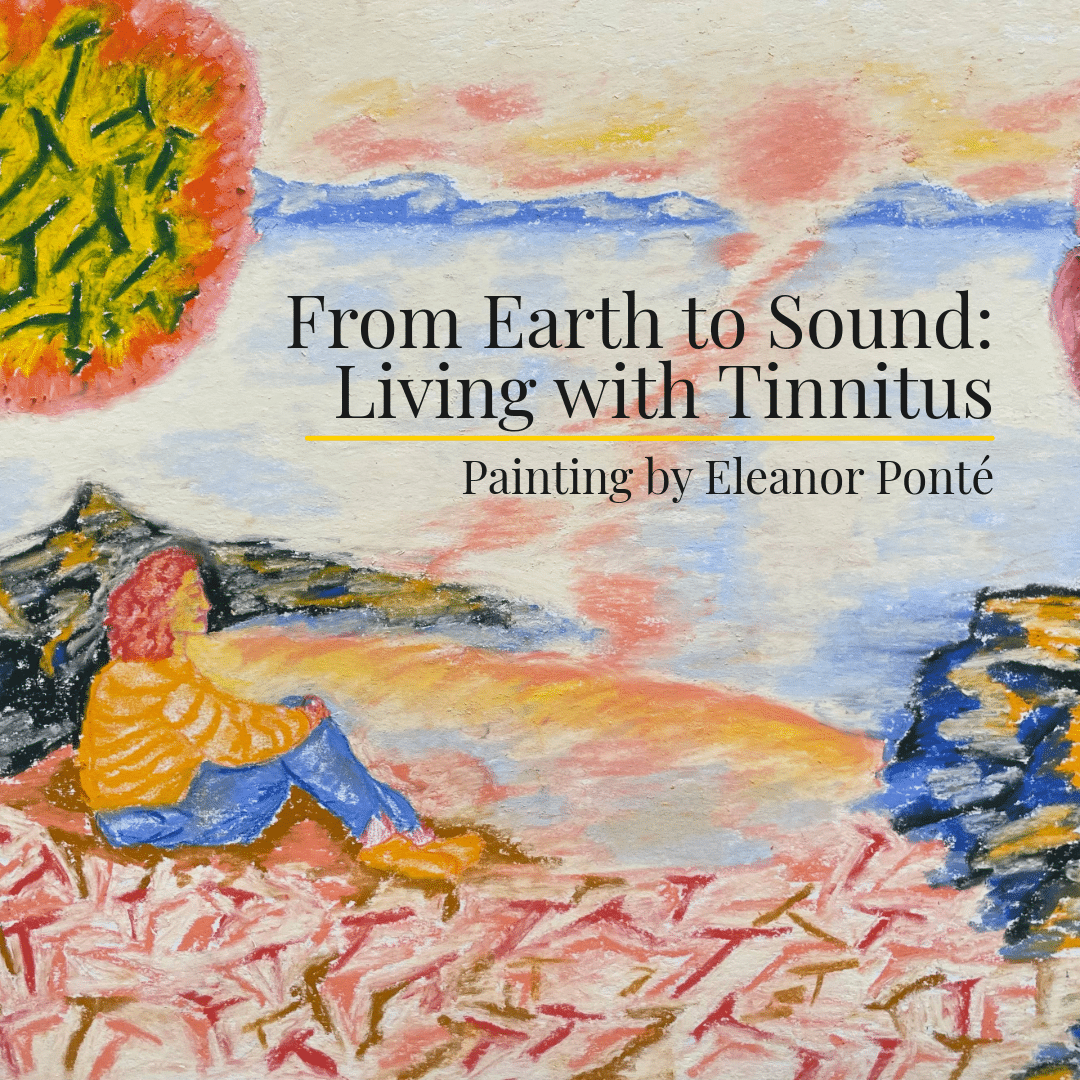
At the heart of the article is a painting titled From Earth to Sound by Eleanor Ponté. Rather than portraying tinnitus as an enemy to be fought or erased, the artwork presents it as a presence that exists within the wider landscape of life.
Seeing tinnitus differently
In the painting, tinnitus is not isolated or exaggerated. Instead, it is woven into a broader scene, suggesting coexistence rather than domination. Repeated visual elements reflect the persistence of tinnitus, while the surrounding environment conveys continuity, resilience, and movement.
This mirrors the experience many people describe: tinnitus is there, but its impact changes depending on context, attention, stress, fatigue, and engagement with the world.
Why lived experience matters
Research increasingly shows that tinnitus distress is shaped less by the sound itself and more by meaning, attention, and emotional response. For many people, tinnitus fluctuates in prominence. At times it fades into the background, while at other moments it becomes intrusive.
Art captures this fluidity in a way that questionnaires and brain scans cannot. It communicates experience directly, helping others understand what it feels like to live with tinnitus rather than simply explaining how it works.
Beyond “fixing” tinnitus
The article gently challenges the idea that tinnitus should always be framed solely as a problem to be solved. While treatment and research remain vital, many people reach a point where adaptation and a changed relationship with tinnitus become central to wellbeing.
This does not mean giving up or minimising distress. Instead, it reflects a shift away from constant struggle toward integration. The artwork embodies this approach by placing tinnitus within life rather than casting it as an abnormal intrusion.
Art and science together
Including From Earth to Sound in the Annual Tinnitus Report highlights an important message: tinnitus care is not only about mechanisms and interventions, but also about meaning and humanity.
Scientific models help explain neural activity and emotional regulation. Artistic expression helps convey identity, experience, and the personal journey of living with sound. Together, they offer a more complete understanding.
Why this matters for patients
When people see their own experience reflected in research and creative work, it can be deeply validating. It builds trust, encourages engagement, and reminds individuals that they are not alone in how they experience tinnitus.
Progress in tinnitus care is not measured only by changes in sound or questionnaire scores, but by whether people are able to live meaningful, engaged lives alongside tinnitus.
At Hashir Tinnitus Clinic, we recognise both the science of tinnitus and the lived reality of those who experience it. Care is shaped not only by evidence, but by listening carefully to each person’s story.
If you would like to explore this reflective piece in more detail, you can read it as part of the Annual Tinnitus Report 2026.
Read the full Annual Tinnitus Report 2026 here:
https://hashirtinnitusclinic.com/news/annual-tinnitus-report/
If you would like to talk about how tinnitus fits into your own life, and how your relationship with sound might change over time, we are always happy to explore this with you during an appointment.