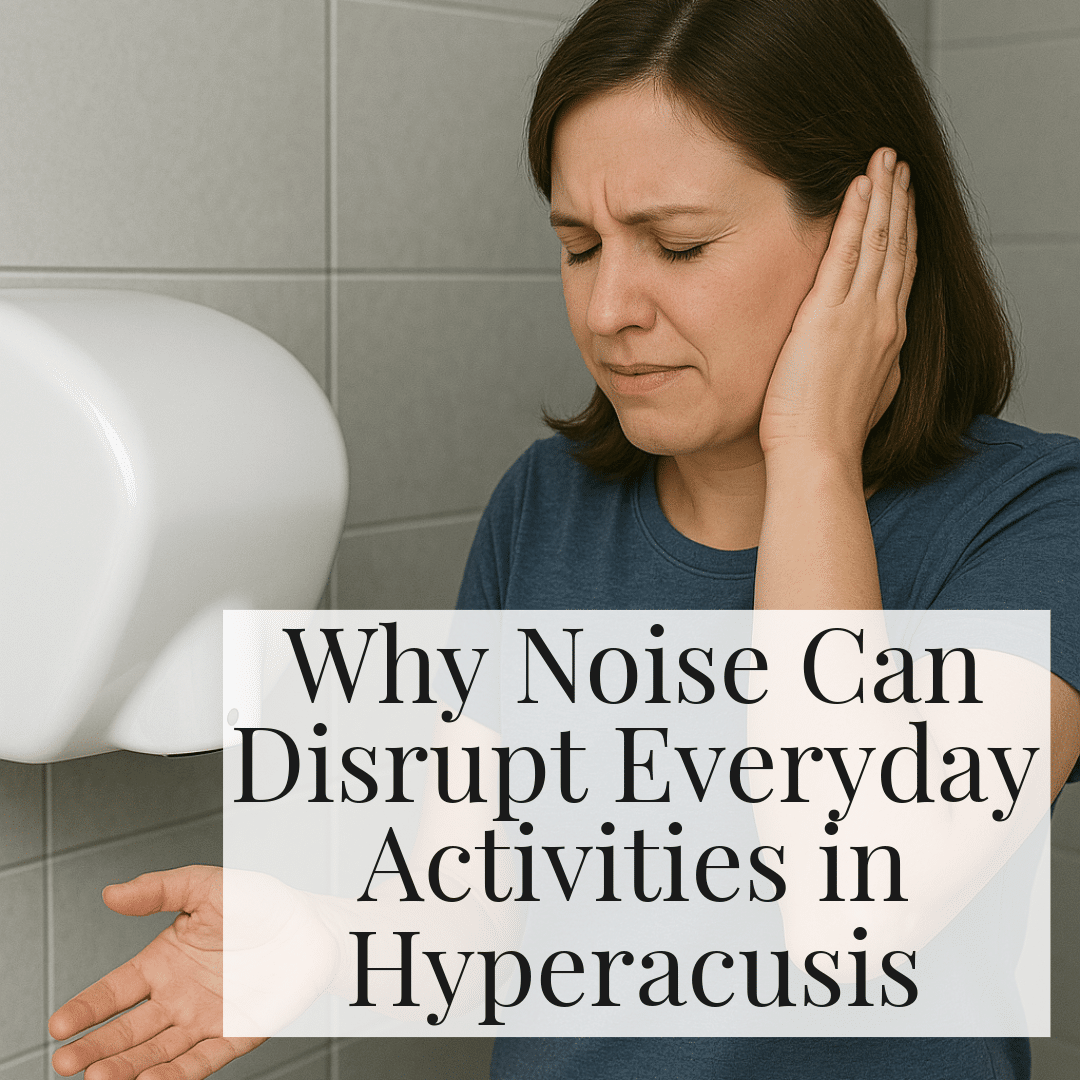
Many people with hyperacusis say that everyday background noise makes it hard to concentrate, read, work, or enjoy social activities. Until recently, this impact was mainly described through personal reports rather than objective testing. A new research study provides strong evidence that noise interferes with daily functioning at much lower sound levels in people with hyperacusis, and introduces a more realistic way to measure this effect.
In late 2025, a research team led by Pierre H. Bourez published a study examining how background noise affects a common everyday task: reading.
Measuring real-life difficulty, not just loudness
Traditional tests of sound tolerance often focus on discomfort levels, but they do not always reflect how noise interferes with daily activities. This study took a different approach by using an ecological task, meaning one that closely resembles real-life situations.
Participants were asked to read a book while exposed to different everyday sound environments, such as background noise you might hear in public or at home. The noise level was gradually increased until participants reported that it interfered with their reading, and then increased further until it became uncomfortable.
People with hyperacusis reach limits much earlier
The results were clear. On average, people with hyperacusis found that noise interfered with reading and became uncomfortable at sound levels around 13 decibels lower than those without hyperacusis.
This confirms what many patients report: sounds that others can ignore or work through can become disruptive or distressing much earlier for someone with hyperacusis.
Performance drops at the point of annoyance
An important and reassuring finding was that once noise reached each person’s individual annoyance threshold, both groups showed similar reductions in concentration and performance.
In other words:
This highlights that hyperacusis shifts the threshold at which noise becomes disruptive, rather than changing how the brain functions once disruption occurs.
Why this matters for understanding hyperacusis
This study provides experimental evidence for something people with hyperacusis have long described: noise does not just feel uncomfortable, it interferes with real-life functioning.
It also helps explain why environments like offices, classrooms, cafés, or public transport can feel exhausting or unmanageable, even when sound levels are considered normal.
A step forward in assessment
The researchers also demonstrated a new way to assess hyperacusis that combines:
This approach offers a more meaningful way to understand how hyperacusis affects daily life, beyond questionnaires alone.
What this means for patients
For people living with hyperacusis, this research offers validation. It shows that difficulties concentrating in noisy environments are not imagined or exaggerated. They reflect real differences in how the auditory system responds to sound.
It also supports approaches to care that:
At Hashir Tinnitus Clinic, assessment of hyperacusis considers how sound affects everyday activities such as reading, working, and social interaction, not just how loud sounds feel in isolation.
Learn more
If you would like to read the original open-access research paper, it is available here:
Bourez, P. H., Vallet, G. T., Gosselin, N., Bergeron, F., & Fournier, P. (2025). An immersive ecological measure of noise-induced functional interference in adults with hyperacusis. Hearing Research.
https://doi.org/10.1016/j.heares.2025.109465
If noise is interfering with your ability to concentrate, work, or enjoy daily activities, we are always happy to explore assessment and support options with you during an appointment.