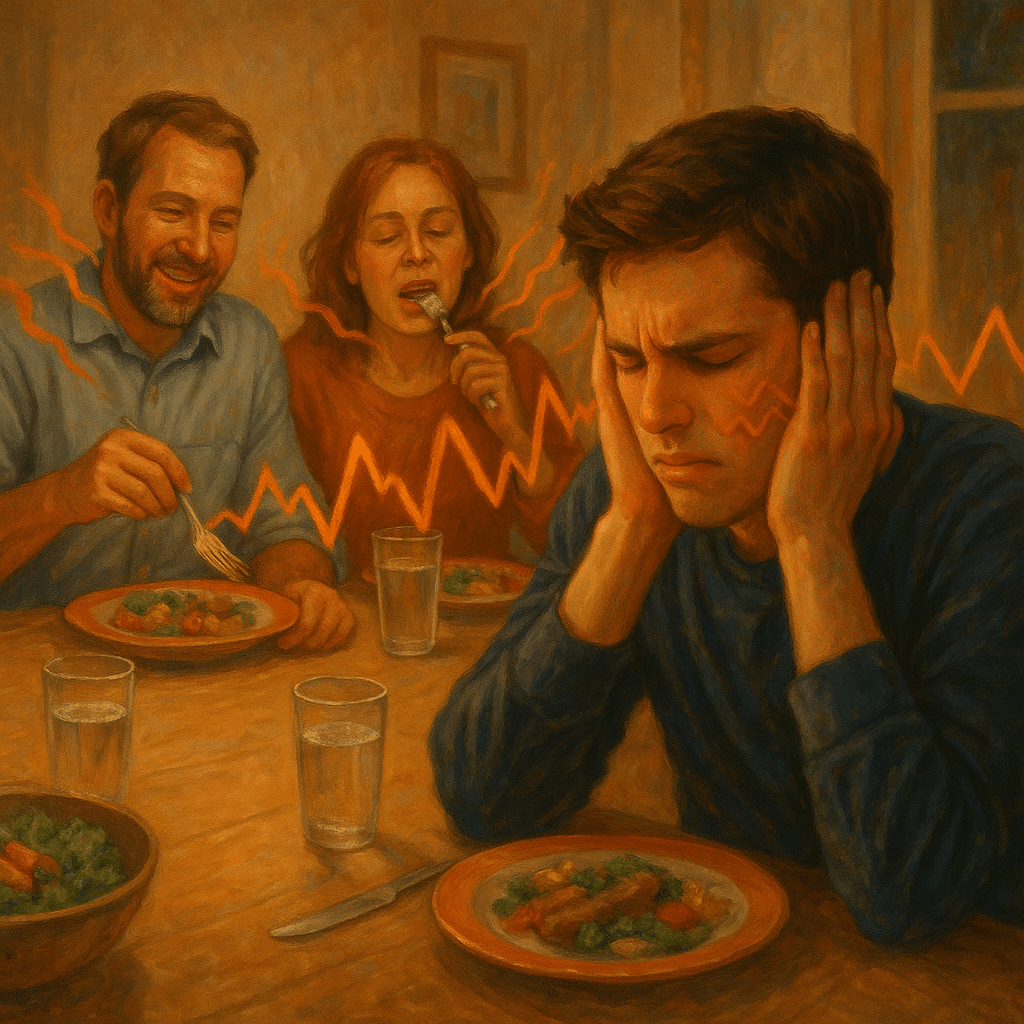
A new neurophysiological study published in Hearing Research provides compelling evidence that misophonia—the experience of strong negative emotional reactions to everyday sounds—has a measurable basis in brain function.
Researchers from India recorded multichannel auditory late latency responses (ALLR) in 30 participants, including 15 individuals with misophonia and 15 without. These brainwave recordings measured how quickly and strongly the auditory cortex responded to sounds.
The study found that people with misophonia showed earlier auditory response latencies and reduced N1 amplitudes compared to controls, indicating heightened cortical reactivity. Scalp topography also differed: misophonia participants showed centro-parietal activation patterns, while controls exhibited fronto-central patterns.
These results reveal altered early auditory processing and atypical cortical activation in misophonia, suggesting that the condition has a clear neurophysiological signature. The authors propose that reduced N1 amplitude may represent a potential biomarker for misophonia, and that multichannel ALLR testing could one day support objective diagnosis and treatment monitoring.
Why this matters
The study strengthens the view that misophonia is not “just a behavioural reaction” but involves identifiable changes in brain processing. This aligns with clinical observations at Hashir International Institute and The Hearing Well Practice, where patients with sound intolerance often describe immediate, automatic emotional responses to trigger sounds.
Understanding the neural basis of these reactions may guide future interventions—combining audiological desensitisation with Cognitive Behavioural Therapy (CBT) and emotion regulation training—to target both the physiological and psychological aspects of sound intolerance.
Full citation
Kamalakannan Karupaiah, Rakesh Trinesh, Ajith Kumar Uppunda, Prashanth Prabhu (2025). Multichannel auditory cortical responses in misophonia: A neurophysiological investigation. Hearing Research, 468:109458. https://doi.org/10.1016/j.heares.2025.109458